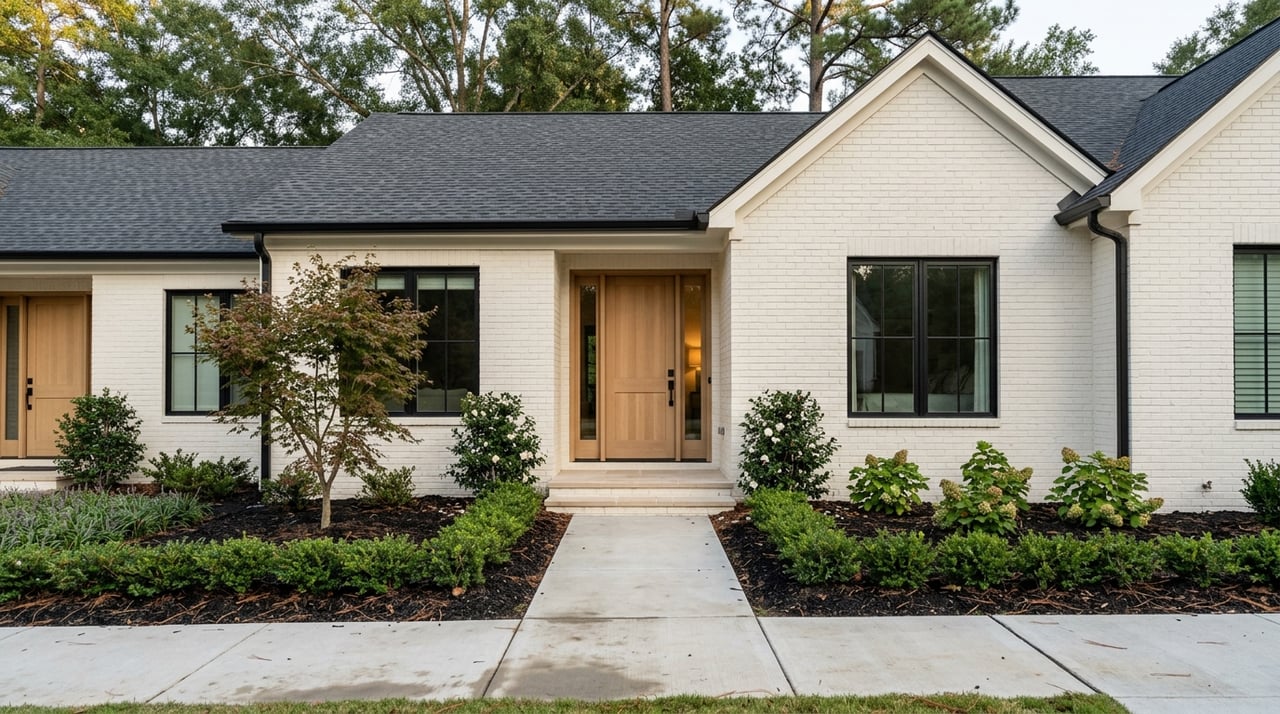
Low-Maintenance Golf Living In Raleigh/Cary
May 7, 2026
May 7, 2026
If you love the idea of golf community living but not the idea of spending every weekend on yard work, Raleigh and Cary deserve a closer look. Many buyers today want the lifestyle perks of a golf setting with fewer exterior chores, simpler upkeep, and a home that fits the next chapter. Whether you are downsizing, relocating, or searching for a second home, understanding how low-maintenance golf living works can help you buy with more confidence. Let’s dive in.
In Cary, local planning materials note that the housing stock is still mostly single-family, while attached homes like townhomes and two-unit homes are in more limited supply and often require less exterior maintenance. That matters if you want to stay near golf amenities while scaling back the time and effort your home demands.
For many buyers, this is not just about convenience. It is about creating more room in your schedule for golf, travel, fitness, dining, and social time. In the Raleigh and Cary area, that mix can be especially appealing because several golf communities pair housing options with broader club amenities.
Prestonwood in Cary advertises 54 holes of championship golf along with tennis, fitness, aquatics, and dining. In Raleigh, Wakefield Plantation promotes an 18-hole course, a 9-hole course, aquatics, tennis and pickleball, and fitness. If you want a home that supports an amenity-rich routine, these communities show why the lifestyle continues to attract attention.
One of the biggest mistakes buyers make is assuming that “low-maintenance” means the same thing everywhere. In reality, that label can cover a wide range of ownership and maintenance structures.
In North Carolina planned communities, the association generally maintains common elements and funds that work through assessments, but the recorded declaration controls the details. In condominiums, state law says the association is responsible for common elements while the unit owner is responsible for the unit, and owners usually need association permission before changing exterior appearance.
That means your actual responsibilities may look very different from one golf community to the next. In one neighborhood, low-maintenance may mean landscaping help only. In another, it may include exterior building upkeep. In a condominium setting, it may go much further.
Before you buy, it helps to think of low-maintenance living in three common buckets:
Brier Creek in Raleigh is a strong local example of how this can vary within one larger golf community. Its HOA says it provides landscaping, monument and sign maintenance, lighting, and depending on the home type, outside building maintenance. Its FAQ also notes that the community includes three HOA layers, including sub-associations for townhomes and condos.
For you as a buyer, the takeaway is simple: never rely on the neighborhood name alone. Two homes in the same golf community can come with different dues, different maintenance coverage, and different approval rules.
Brier Creek Country Club in Raleigh is one of the clearest examples of low-maintenance golf living with multiple ownership structures. The HOA lists sub-associations such as Cypress Point, Glen Eagles, Laurel Creek, Oak Hill, St. Andrews, and Willow Bend, which shows how one larger community can contain several different maintenance models.
That structure can be helpful if you want choices. You may be able to compare attached housing, varying lot sizes, and different levels of exterior responsibility without leaving the broader Brier Creek setting.
A current example is Overlook at Brier Creek, which Toll Brothers describes as a low-maintenance townhome-style condominium community within Brier Creek Country Club. It is a useful reminder that golf community living does not always mean buying a detached home with a larger yard.
In Cary, Preston is another strong fit for this conversation because it includes several housing styles. Preston Development Company says the community includes golf villas, condos, townhomes, and estate homes.
That variety can be a major advantage if your goal is to match your home to your lifestyle. If you want less upkeep, you can focus on the ownership types that may reduce exterior responsibilities or lot maintenance, rather than assuming every Preston property works the same way.
Just as important, Prestonwood Country Club says homeownership within the immediate Preston development is not required for membership. That reinforces an important point for buyers: golf access and homeownership are not always tied together in the way people expect.
When buyers hear “golf community,” they sometimes assume the HOA owns the course, the dues include the club, or buying the home automatically provides membership. In many cases, that is not how it works.
Brier Creek’s HOA says the club and golf course are owned by separate entities. Prestonwood also states that homeownership in the immediate Preston development is not required for membership. So if club access matters to you, it is important to confirm the details rather than assume they are included.
This is one of the most valuable questions you can ask early in your search. You want to know which costs relate to the home, which relate to the HOA, and which relate to optional club membership.
Low-maintenance golf living can be a great fit, but it comes with trade-offs that deserve a clear look. For many buyers, the upside is easy to see: less yard work, reduced exterior upkeep, and a simpler day-to-day routine.
The trade-offs may include tighter lot sizes, shared walls, less privacy, and more community rules. HOA dues may also support common facilities even if you do not use every amenity, and dues can change over time or be supplemented by special assessments.
That does not make these communities a poor choice. It simply means you should compare lifestyle benefits and maintenance savings against the structure, fees, and restrictions that come with the property.
If you are considering a downsizer property, second home, or easier-care primary residence, your due diligence matters. North Carolina guidance encourages buyers to ask for the bylaws and covenants, understand fees and special assessments, and confirm whether architectural approvals are needed for changes like paint colors or additions.
State law also requires disclosure of whether a property is subject to an association, the regular dues, services paid by dues, approved special assessments, pending lawsuits, and transfer fees. That information gives you a better picture of the true ownership cost.
Here are the key documents and details to request before moving forward:
You should also confirm whether the community is governed as a planned community under Chapter 47F or a condominium under Chapter 47C. Those statutes can shape maintenance responsibilities, voting rules, and how the community operates.
If your goal is to simplify life, the right question is not just “Is this home low-maintenance?” The better question is “What maintenance is actually covered here, and what still falls on me?”
That small shift can save you from big surprises later. In older or more custom golf neighborhoods, the maintenance split may be defined in the recorded declaration, not in the marketing language.
A thoughtful home search should compare more than square footage and price. It should also compare lot size, exterior responsibility, dues structure, club access, and the overall fit between the community and how you want to live.
If you are exploring low-maintenance golf living in Raleigh or Cary, working with a local specialist can make that comparison process much clearer. When you are ready to sort through golf villas, townhomes, condos, and easier-care homes near the course, connect with Eddie Niemeyer for a personalized consultation built around your lifestyle goals.
Stay up to date on the latest real estate trends.
Eddie Niemeyer leverages local Raleigh knowledge, Coldwell Banker Advantage’s vast resources, and a client-centered mindset. Let him guide you confidently through buying, selling, or investing with personalized service and strategic insight.