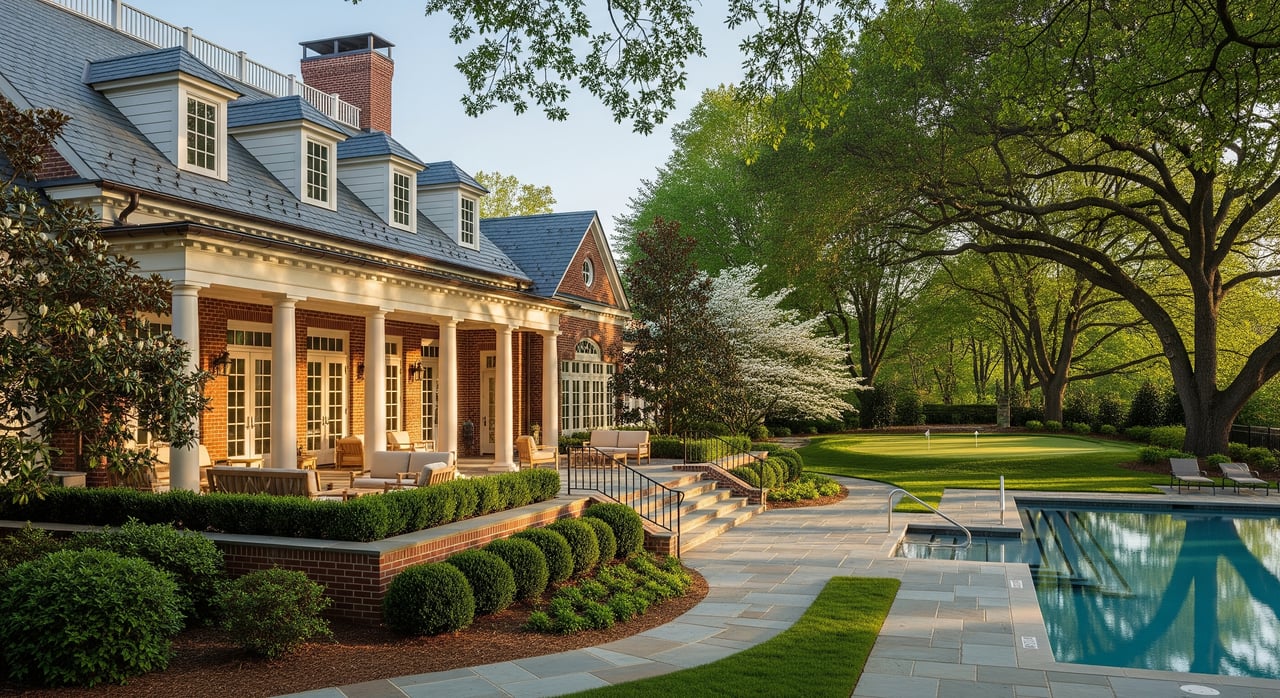
Surprised by how fast “extras” can inflate a monthly payment? In Chapel Hill, HOA and club dues can shift your budget more than the list price or interest rate. If you understand what each fee covers and how they change over time, you can shop with confidence and avoid surprises at closing. This guide breaks down HOA versus club dues, typical cost drivers, and a step-by-step way to forecast your total monthly ownership cost in Chapel Hill and Orange County. Let’s dive in.
HOA vs. club dues: the basics
Not all dues are the same. HOA or POA dues and club dues fund different things and may have different rules.
- HOA or POA dues are usually mandatory for every owner in a planned community or condo. They pay for common-area upkeep, association insurance, management, and reserves.
- Club dues support a private club such as a golf, social, or athletic club. Membership can be optional or mandatory depending on the community’s recorded documents.
In North Carolina, most planned communities and condos fall under the North Carolina Planned Community Act and the North Carolina Condominium Act. Associations operate through recorded covenants, bylaws, and rules. As a buyer, you will receive disclosure documents that outline current assessments, budgets, and rules. Always read the CC&Rs and any club membership agreement to confirm which fees are required.
What HOA dues typically cover
HOA and POA dues focus on shared assets and operations that keep the neighborhood running:
- Exterior and common-area maintenance such as landscaping, entry features, private streets and lighting, playgrounds, pools, tennis courts, and surface repairs
- Insurance for association-owned structures and liability coverage for shared areas
- Professional management, bookkeeping, legal, and accounting services
- Utilities for common spaces such as irrigation, clubhouse electricity, or water for shared areas
- Reserve contributions for long-term repairs like paving, roof replacements on association buildings, and amenity refreshes
- Trash and recycling service in some communities, and occasionally bulk cable or internet
- Security and gate operations where applicable
- Administrative costs such as mailings, compliance, and meetings
What club dues typically cover
Club dues fund the day-to-day experience and upkeep of the club:
- Golf course and clubhouse operations including greenkeeping, pro shop, staff, and food and beverage
- Ongoing course and facility maintenance and improvements
- Member programming such as tournaments, lessons, and social events
- Capital dues or assessments for renovations and upgrades
- Member benefits such as discounts or reciprocity, plus per-use fees like carts, guests, or dining minimums
Some Chapel Hill communities have a private club separate from the HOA. Others have club facilities owned or controlled by the association. Membership terms vary, so verify whether club fees are optional or recorded as mandatory.
What dues rarely cover
You still handle costs tied to your specific home:
- Interior repairs, appliance replacement, and HVAC service (condos can differ on certain exterior systems)
- Mortgage, property taxes, and your individual homeowner’s insurance policy
- Utilities billed to your home such as electricity, gas, internet, and water if not included in dues
- Individual yard care in many single-family neighborhoods unless stated otherwise in the documents
When there are multiple layers of fees
It is common to see more than one association in larger planned communities. You might pay a sub-association fee for your neighborhood and a master association fee for larger shared amenities. Some developments also bundle mandatory club membership into the covenants. Always confirm whether a golf or social membership is required at closing or optional.
What drives dues in Chapel Hill
Dues are not one-size-fits-all. Several factors influence amounts and future changes.
HOA and POA cost drivers
- Amenity mix. Pools, fitness centers, clubhouses, private streets, gates, and extensive landscaping increase costs.
- Size of association. Smaller neighborhoods spread fixed costs across fewer homes, which can raise per-home dues.
- Age and condition. Older amenities or deferred maintenance often mean higher reserves or special assessments.
- Reserve funding policy. Communities that fully fund reserves usually have higher steady dues but lower risk of sudden assessments.
- Local costs. Labor, water, insurance, and vendor rates in Chapel Hill and the Triangle shape budgets.
- Management choices. Professional management versus volunteer-led operations can change administrative expenses.
Club cost drivers
- Club type and quality. Full-service private golf clubs tend to have higher dues than purely social clubs.
- Membership model. Equity clubs often carry higher initiation fees. Non-equity clubs may have lower buy-ins with different monthly structures.
- Course maintenance level and staffing needs.
- Dining and event operations.
- Capital projects and how the club funds them through capital dues or special assessments.
Typical ranges to expect
- HOA and POA dues can range from under one hundred dollars per month in simple communities to several hundred per month in amenity-rich neighborhoods or condos. Amenity-heavy or golf-oriented communities often fall in the mid-hundreds per month.
- Club dues range widely. Social memberships can be modest, while full golf memberships are often several hundred dollars per month plus a one-time initiation fee. Initiation fees can range from thousands to tens of thousands for private equity clubs.
The Triangle, including Chapel Hill, trends toward the higher end of these ranges for premium communities. Always verify exact numbers with each association and club.
Forecast your total monthly cost
Treat HOA and any mandatory club dues as part of your base housing payment. Use this simple formula to build your monthly budget before you tour homes.
- Monthly Mortgage Payment: principal plus interest
- Monthly Property Taxes: annual tax divided by 12
- Monthly Homeowner’s Insurance: annual premium divided by 12
- HOA or POA Dues: monthly amount
- Club Dues: monthly amount if membership is mandatory or you plan to join
- Utilities: electricity, gas, water and sewer if billed to owner, and trash if not included
- Maintenance Reserve: start with 1 percent of home value per year, divided by 12; consider 2 to 3 percent for older properties
- Anticipated Special Assessments: total expected amount divided by the payment period in months
- Optional Recurring Costs: yard service, pest control, umbrella insurance, storage, or private security
Equals your Estimated Total Monthly Housing Cost.
Example framework
Plug in the actual numbers for any home you are considering.
- Home price: enter the expected purchase price
- Mortgage payment: calculate using rate, term, and down payment
- Property taxes: multiply assessed value by current rate and divide by 12
- HOA dues: insert the association’s monthly amount
- Club dues: insert monthly club dues or zero if not joining
- Maintenance reserve: 1 percent of price divided by 12 (adjust higher for older homes)
- Special assessments: if a planned assessment is $X over Y years, monthly equals X divided by Y times 12
Use the total to compare communities by actual carrying cost instead of list price alone.
Plan for the next 1 to 5 years
Budgeting for today is not enough. Build three scenarios to see how costs could change:
- Conservative. Assume a near-term special assessment and higher annual increases for dues.
- Baseline. Use current dues and a typical 2 to 3 percent annual increase.
- Optimistic. Assume steady dues and no special assessments.
Run each scenario over 1, 3, and 5 years. This helps you test affordability across different communities and membership choices.
Red flags that can raise costs later
Protect your budget by spotting risk early:
- Low reserve balances or the absence of a recent reserve study
- A pattern of frequent special assessments or borrowing for capital work
- Pending litigation involving the association
- Long contracts with escalators for management, landscaping, or a club operator
- Club ownership instability or unclear policies on dues and capital projects
Documents and questions to request
Ask for these items before you commit so you can verify every line of your budget.
Key documents
- CC&Rs or Declaration of Covenants
- Bylaws and rules and regulations
- Current operating budget and balance sheet
- The most recent reserve study and reserve balance report
- Minutes from the last 12 to 24 months of board meetings
- Current assessment schedule and any pending special assessments
- Insurance certificate for association property with a coverage summary
- Any litigation disclosures
- Management and key vendor contracts, including any agreement with a golf or club operator
- Club membership agreement outlining initiation fees, dues, transferability, and refund terms
Essential questions
- Are any special assessments or capital projects planned in the next 3 to 5 years?
- Is club membership mandatory? If yes, what are the initiation fees and monthly dues? Are any portions refundable or transferable?
- How often and by how much have dues increased historically?
- What percentage of the reserve study is funded and when was it last updated?
- Are there rental restrictions or minimum lease terms?
- Which services are included in HOA dues such as trash, water, cable, or internet?
- Is the association or club involved in any litigation?
- What are late fee, interest, lien, and collection policies for assessments?
Chapel Hill and Orange County specifics
Chapel Hill’s higher-than-average home values can lift absolute costs for taxes, insurance, and your maintenance reserve. Dense tree cover and seasonal rainfall influence landscaping and stormwater needs, which can flow into association budgets. Local labor and water rates across the Triangle impact vendor pricing. Proximity to the University of North Carolina at Chapel Hill supports strong demand, and some associations maintain firm rental rules. Always confirm current tax rates with the county and ask associations how local costs are trending in their budgets.
Compare communities by total cost
When you narrow your list, compare homes and neighborhoods by total monthly cost, not just price per square foot.
- HOA-only communities. Focus on what the dues include, the strength of reserves, and any planned projects.
- HOA plus private club communities. Confirm whether membership is optional or mandatory, review initiation fees and capital dues, and model the 1 to 5 year scenarios before you write an offer.
If a model home or listing sheet shows placeholder dues, request the current operating budget and resale disclosures before making a decision. It is normal to ask for this during your home search so you can plan responsibly.
Make your next step simple
Your budget should align with the lifestyle you want, whether that is morning tee times, summer pool days, or low-maintenance living close to town. If you want help matching club options and HOA structures to your goals in Chapel Hill, you can get a clear, numbers-first plan and a curated set of homes that fit.
Start a conversation with Eddie Niemeyer to map your total monthly budget, compare communities, and tour the right homes at the right pace.
FAQs
What is the difference between HOA dues and club dues in Chapel Hill?
- HOA dues fund common-area upkeep, insurance, management, and reserves for the community; club dues fund a private club’s operations such as golf, dining, and social events and may be optional or mandatory depending on recorded terms.
Are club memberships mandatory in Chapel Hill communities?
- It depends on the recorded CC&Rs and any club agreements; some neighborhoods include mandatory club membership while others make it optional, so always verify before you offer.
How much should I budget for HOA dues in a Chapel Hill golf community?
- Amounts vary with amenities and size, but amenity-rich or condo communities often fall in the mid-hundreds per month; confirm exact figures with each association’s current budget.
Do HOA dues include my property taxes or homeowner’s insurance?
- No; owners pay their own mortgage, property taxes, and individual insurance policies, while HOA dues support common-area expenses and reserves.
How do I estimate the impact of a potential special assessment?
- Divide the total expected assessment by the number of months in the payment period and add that amount to your monthly budget scenarios to stress-test affordability.
What documents should I review before making an offer in Chapel Hill?
- Request CC&Rs, bylaws, current budgets, reserve studies and balances, 12 to 24 months of meeting minutes, the assessment schedule, insurance certificates, litigation disclosures, and any club membership agreements.