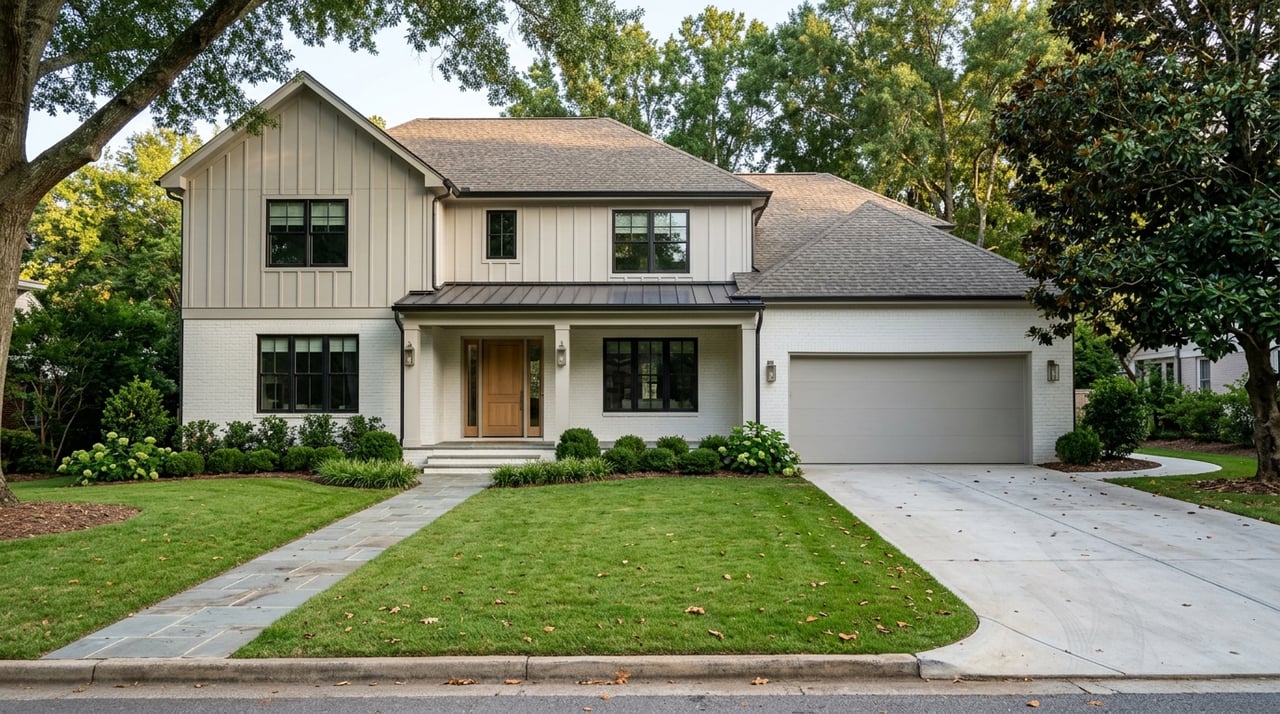
Public Vs Private Golf Living In Durham Communities
July 9, 2026
July 9, 2026
Choosing a golf home in Durham is not just about the view from your back patio. It is also about how you want to use the course, what you want to pay for each month, and how much structure you want around your lifestyle. If you are weighing public versus private golf living, understanding those differences up front can save you time and help you buy with more confidence. Let’s dive in.
In Durham, Hillandale Golf Course is a clear example of the public-course model. The course is open to the public, tee times are required, and tee times can be booked seven days in advance. It uses posted weekday and weekend rates, which gives you a pay-as-you-play setup rather than a membership commitment.
For many buyers, that creates flexibility. If you want to play often, you can book tee times and go. If your schedule changes or golf becomes a smaller part of your routine later, you are not locked into a private club structure just to keep enjoying your home.
Hillandale also reports about 56,000 rounds played each year. That kind of volume tells you the course serves a broad base of players, which is part of what makes public-course living feel accessible and less formal. It is a different rhythm from a private club environment.
Another local factor is public investment. The City of Durham is investing in Hillandale improvements that include new putting greens, tee-box relocations, drainage, irrigation, and other upgrades. For a buyer, that means the golf amenity is tied in part to city-led improvements rather than private club dues.
Housing near older public golf corridors in Durham often follows the city’s established residential pattern. Durham’s comprehensive plan describes established residential areas as neighborhoods that were traditionally built without homeowners associations or private open space. These areas can include a mix of single-family homes, duplexes, and multiplexes.
That matters because your home search may look different here than it would in a newer planned golf setting. In parts of the Hillandale area, you may see older housing stock, more architectural variety, and more one-off property characteristics. That can be appealing if you value personality and a less uniform neighborhood feel.
The Watts-Hillandale Historic District offers a useful local example. Its housing stock includes bungalows, Foursquares, Colonial Revival boxes, and period-revival houses. Durham’s preservation planning for the area emphasizes maintaining single-family residential use where possible.
Durham’s Neighborhood Compass also notes that housing age often tracks development history, and the city’s oldest neighborhoods date to the 1920s and 1930s. In practical terms, that can mean more maintenance questions, older systems, and more due diligence during your home search. The charm may be strong, but so is the need to understand the condition of the property.
If public-course living is about flexibility, private-club living is usually about bundled amenities and a more structured experience. In Durham, Croasdaile Country Club is the clearest local example. The Durham Sports Commission describes it as Durham’s private retreat for golf, recreation, and community.
Croasdaile’s membership structure helps show how private-club living works. The club lists Golf, Racquet Sports, Social, and Associate Golf & Racquet Sports memberships. Golf members receive access to all club amenities, while racquet sports members get year-round pickleball and tennis programming plus dining and pool access. Social members receive dining, pool, and event-space access.
The club also highlights golf, tennis and pickleball, swimming, clubhouse dining, events, and a renovated pool facility open for the 2026 season. For some buyers, that creates a more complete lifestyle package. You are not just living near a course. You are buying into a setting where recreation and social programming may be a bigger part of everyday life.
Durham’s comprehensive plan describes planned neighborhoods as larger subdivisions with homes that are similar in appearance, internal roads, resident-only green space and recreation, and HOA management. Planned neighborhoods can include single-family homes, townhouses, and garden apartments.
That description lines up more closely with what many buyers expect around private-club settings. In the broader Croasdaile area, Durham planning records describe Croasdaile Farm North as single-family and townhome development. The Lodge at Croasdaile Farm is described as 292 apartments plus 32 townhome units.
The current Durham Neighborhood Compass profile for Croasdaile Farm reports a median household income of $112,386, 41.7% renter households, and a median rent of $2,079. Those figures do not describe the club itself, but they do help frame the surrounding area as a place that can include newer and higher-cost planned housing options. That is a different pattern from many older public-course-adjacent areas.
When you compare public and private golf living in Durham, the main differences come down to access, governance, and recurring cost. Those three issues shape your day-to-day experience more than the fairway view alone.
With public-course living near Hillandale, your golf access is generally tied to tee times and posted fees. You can enjoy the course without taking on a separate club membership commitment. That can be a smart fit if you want golf nearby but do not need a full amenity package.
With private-club living tied to Croasdaile, access is organized around membership categories. Your homeownership and your club participation may be connected in lifestyle terms, but they are not the same thing. That means you need to understand what type of membership you would want, what it includes, and what it costs in addition to housing expenses.
Here is a simple way to think about it:
Before you fall in love with a home, confirm how the golf lifestyle actually works at that address. In Durham, that starts with understanding whether club membership is required, optional, or completely separate from ownership. Do not assume a home near a course automatically comes with access.
You should also confirm what amenities are included. A private club may offer golf, racquet sports, pool access, dining, and events, but access depends on the membership category. The difference between a golf membership and a social membership can be significant.
Next, look at recurring costs. In some neighborhoods, you may have HOA dues, club dues, or both. Those costs can change the affordability picture quickly, especially if you are comparing an older home near a public course with a newer home in a planned development.
Finally, check for property-use and exterior-change rules. Durham’s Unified Development Ordinance governs allowed uses, subdivision, building placement, parking, landscaping, and environmental protections. The city’s historic-review rules also apply to local historic districts and landmarks through the Certificate of Appropriateness process.
Use this checklist when comparing homes near Hillandale, Croasdaile, or other golf-oriented areas in Durham:
If you want flexibility, fewer built-in obligations, and the option to pay for golf as you use it, public-course living may be the better fit. Hillandale shows how that model can work in Durham. You get nearby golf access without the same level of formal membership commitment.
If you want a more bundled lifestyle with golf and other amenities organized through a club structure, private-club living may make more sense. Croasdaile shows the appeal of a setting where golf, racquet sports, pool time, dining, and events can all be part of the experience. That can be especially attractive if you want your home search to support both recreation and social routines.
The right answer depends on how you live, how often you play, and how much structure you want around your amenities. A great golf home is not just about the property itself. It is about matching the home, the course model, and the neighborhood setup to the life you want in Durham.
If you are comparing golf homes in Durham and want help sorting through club access, neighborhood patterns, HOA questions, and lifestyle fit, Eddie Niemeyer can help you narrow the options and move forward with clarity.
Stay up to date on the latest real estate trends.
Eddie Niemeyer leverages local Raleigh knowledge, Coldwell Banker Advantage’s vast resources, and a client-centered mindset. Let him guide you confidently through buying, selling, or investing with personalized service and strategic insight.