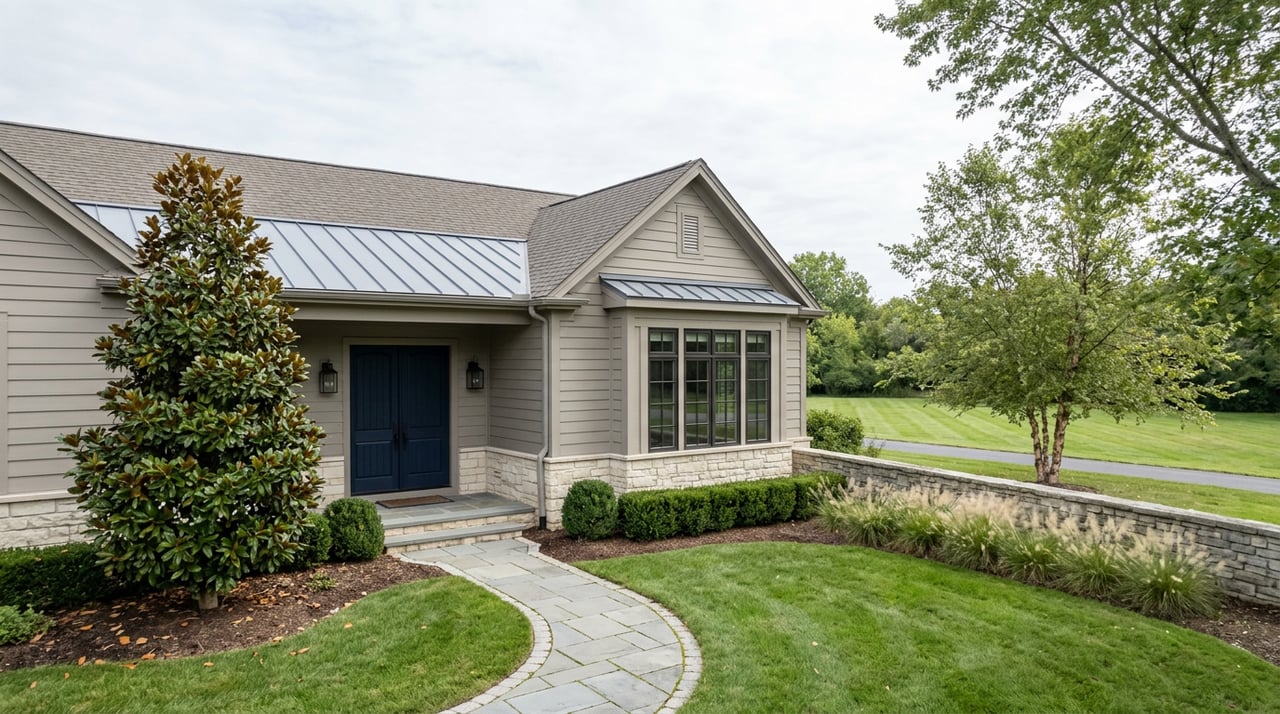
Chapel Hill Golf Communities Compared: Four Buy-In Models
September 24, 2026
September 24, 2026
A buyer touring homes near Governors Club recently asked a simple question: does this house come with a golf membership? The honest answer took longer to give than she expected. Yes, in a sense. No, not really. It depends which membership you mean, and the one that actually lets you play the course costs more than joining some other clubs in Chapel Hill outright.
That confusion is not a one-off. It is baked into how Chapel Hill's golf real estate is described. Search listings near any of the town's four named golf venues and you will see some version of "golf community" attached to all of them, as if the phrase describes one consistent arrangement between a home and a course. It does not. Governors Club, Chapel Hill Country Club, Carolina Meadows, and The Preserve at Jordan Lake differ in how, or whether, golf access is connected to homeownership, and those distinctions involve real money and real legal structure, not just atmosphere.
Start with the one that causes the most confusion. Governors Club's own membership application lists a General Membership with a $2,500 initiation fee, $135 in monthly dues, and a $25 monthly capital improvement fee. On paper, that is the cheapest buy-in of any club in this comparison by a wide margin.
But General Membership does not include golf. To actually play the Jack Nicklaus-designed course that gives the community its name, a resident needs the Full Golf Membership tier, which runs an initiation fee in the $50,001 to $75,000 range with annual dues between $10,001 and $15,000. That is not a rounding error. It is a membership tier that costs more to join than some entire clubs in this market, sitting one line below a $2,500 entry point on the same fee schedule.
The club also caps its own capacity. Total membership is limited to 780, and golf membership within that total is capped at 525. A buyer who assumes a home in Governors Club automatically comes with golf access, or that the club's entry-level price represents what golf actually costs there, is working from the wrong number twice over.
Chapel Hill Country Club solves a different problem for a different buyer, mostly because it is not a real estate community at all. It is a freestanding private club in the middle of town, and by its own description it is the only private country club in historic Chapel Hill, with a membership history stretching back roughly a century.
That distinction matters more than it sounds. There is no gated development, no covenant-restricted neighborhood, and no HOA tying a specific set of homes to this club. Initiation runs in the $25,001 to $50,000 range with annual dues between $5,001 and $10,000, according to membership tier data published for the club. But joining is a personal decision entirely separate from where you buy. A home near downtown Chapel Hill does not come with, or require, any relationship to this club. Membership is something you opt into on its own terms, the way you would join a gym across town.
This is the opposite failure mode from Governors Club. There, buyers might assume golf is included when it isn't. Here, buyers sometimes assume a historic in-town home has some formal tie to the local country club when it doesn't. Proximity is not membership in either direction.
Carolina Meadows breaks the pattern entirely. It is a nonprofit, accredited continuing care retirement community on a 166-acre campus, and it happens to include a nine-hole, par-3 golf course as one of its recreational amenities.
The number that matters here isn't a golf initiation fee. It's an entrance fee, because that's what actually buys access. Entrance fees for the community run from roughly $117,000 to $485,000 depending on unit and plan, with monthly fees in the $2,300 to $3,100 range. Some plans include a 75% return-of-equity refund option, structured more like a housing and healthcare contract than a club membership.
There's also a practical qualifier that doesn't exist at the other three: golf is one amenity within that community, structured around a continuum of independent living, assisted living, and skilled nursing on one campus. That's a legitimate and common model for retirement communities nationally, and it's worth knowing upfront if a search result surfaces Carolina Meadows alongside Governors Club or Chapel Hill Country Club as though they're comparable golf-lifestyle options. They aren't solving the same problem. One is selling golf-adjacent living. The other is selling a healthcare and housing plan that includes a golf course.
Then there's The Preserve at Jordan Lake, which sits at the far opposite end from Governors Club. It's a semi-private, daily-fee course designed by Davis Love III, sitting along the shoreline of Jordan Lake, open to the public with no membership requirement at all. Green fees have typically run in the neighborhood of $85, and the course has drawn recognition, including a spot on Golfweek's list of the nation's top new courses in the early 2000s.
There's no residential development tied to it, no initiation fee gatekeeping access, and no annual dues obligation. A homeowner anywhere within a reasonable drive can show up, pay a green fee, and play. For a buyer who wants proximity to a well-regarded course without buying into a club structure, or who simply isn't ready to commit five or six figures to a membership before they've lived in the area for a season, this is the one model in Chapel Hill that asks nothing of you beyond the round you're about to play.
Put the four side by side and the phrase "golf community" can refer to very different arrangements: some offer an optional club membership separate from homeownership, one includes golf as an amenity within a healthcare and housing plan, and one is a public course with no membership requirement. The dollar figures aren't just different amounts on a similar structure. They're different kinds of financial commitments entirely.
Before writing an offer on a home marketed near any of these four, it's worth asking a short list of direct questions:
None of these questions require special access. They're the kind of thing a listing agent or club membership office should answer plainly, and the answers change what "golf community" is actually going to cost a buyer over the first year of ownership.
Does buying a home in Governors Club require joining the club? Membership is separate from the real estate transaction itself, but golf access specifically requires the Full Golf Membership tier, which carries a materially higher initiation fee and dues than the club's General Membership.
Can someone outside Carolina Meadows play its golf course? Carolina Meadows' course is part of its resident amenity package on a retirement campus, structured around entrance and monthly fees rather than a standalone golf membership open to the general public.
Is The Preserve at Jordan Lake open to anyone, or do you need to know a member? It's a daily-fee public course. No membership or sponsorship is required to book a tee time.
Does living near Chapel Hill Country Club mean any obligation to join? No. It's a private club without an attached residential development, so nearby homeowners have no formal tie to it unless they apply for membership independently.
Golf-adjacent real estate in Chapel Hill rewards buyers who ask what a course actually connects to before they fall in love with the view from the back deck. If you're comparing these communities and want the membership structure, waitlist status, and real cost breakdown explained before you tour, North Carolina Golf Homes built exactly that kind of local expertise for this market. Begin your golf lifestyle journey and schedule a free consultation.
This article is general information, not legal, tax or financial advice. Consult a qualified professional about your situation.
Stay up to date on the latest real estate trends.


Eddie Niemeyer leverages local Raleigh knowledge, Coldwell Banker Advantage’s vast resources, and a client-centered mindset. Let him guide you confidently through buying, selling, or investing with personalized service and strategic insight.