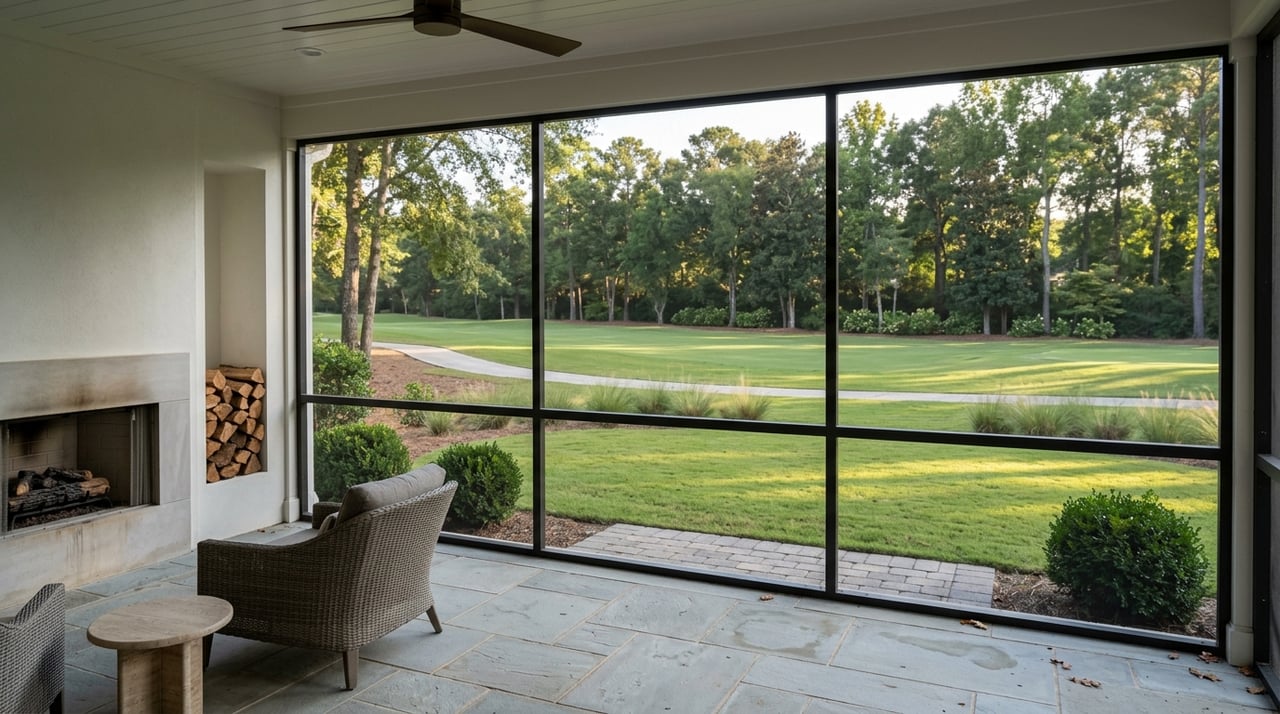
How To Price A Durham Home On The Golf Course
July 16, 2026
July 16, 2026
Wondering if you can just add a golf-course premium and call it a day? In Durham, that approach can backfire fast. If you want to price a home on the golf course correctly, you need more than a rough estimate. You need a strategy built around local sales, lot-specific advantages, and how buyers actually see value. Let’s dive in.
Durham’s housing market was still active in May 2026, with median sales prices reported around $422,915 to $429,995, median days on market around 19 to 20, and active inventory around 1,165 to 1,245. Redfin also reported a median sale price of $425,000 for the three months ending May 2026, down 1.2% year over year.
That matters because a golf-course location does not automatically give you room to overprice. In a market like this, buyers still compare your home against recent closed sales. If your asking price gets too far ahead of what the market has supported, even a strong lot and attractive course setting may not be enough.
The most reliable way to price a Durham golf-course home is to begin with recent closed sales, not active listings or hopeful seller expectations. Comparable sales are the foundation of a solid pricing strategy because they show what buyers actually paid for homes with similar size, location, condition, and features.
Fannie Mae’s appraisal guidance says sales within the same market area or subdivision are the best indicator of value when available. It also notes that appraisers generally prefer at least three closed comparable sales and favor sales from the last 12 months when possible.
For you as a seller, that means the best comp set is usually not “all golf homes in Durham.” It is typically the most recent and most similar sales in your same club community or golf micro-market.
Not all Durham golf communities compete on equal terms. Hope Valley, Croasdaile, and Treyburn each have different histories, lot patterns, home styles, and amenity profiles. Those differences can change how buyers respond to price.
Hope Valley Country Club is rooted in 1926 and sits within a historic district organized around the golf course. Croasdaile Country Club dates to 1966 and includes golf, tennis, swimming, and clubhouse amenities. Treyburn Country Club opened in 1988 on 220 acres and features a Tom Fazio-designed championship course along with tennis, aquatics, fitness, and clubhouse amenities.
Because these communities feel different and attract buyers for slightly different reasons, your home should usually be compared first to recent sales in the same club setting. If your property is in Hope Valley, for example, comparing it directly to a newer golf-community home may miss the impact of architectural character, update level, and historic context.
No. Research on golf-course premiums is mixed, which is exactly why pricing should stay grounded in local comps. One study found a premium for homes abutting a golf course, another found no significant premium in one golf-oriented development, and a more recent study found lower values for abutting homes in a California market.
In plain English, there is no universal golf-course markup. A Durham buyer may pay more for one lot and not another, even within the same neighborhood. The exact value depends on the view, privacy, condition, and overall setting.
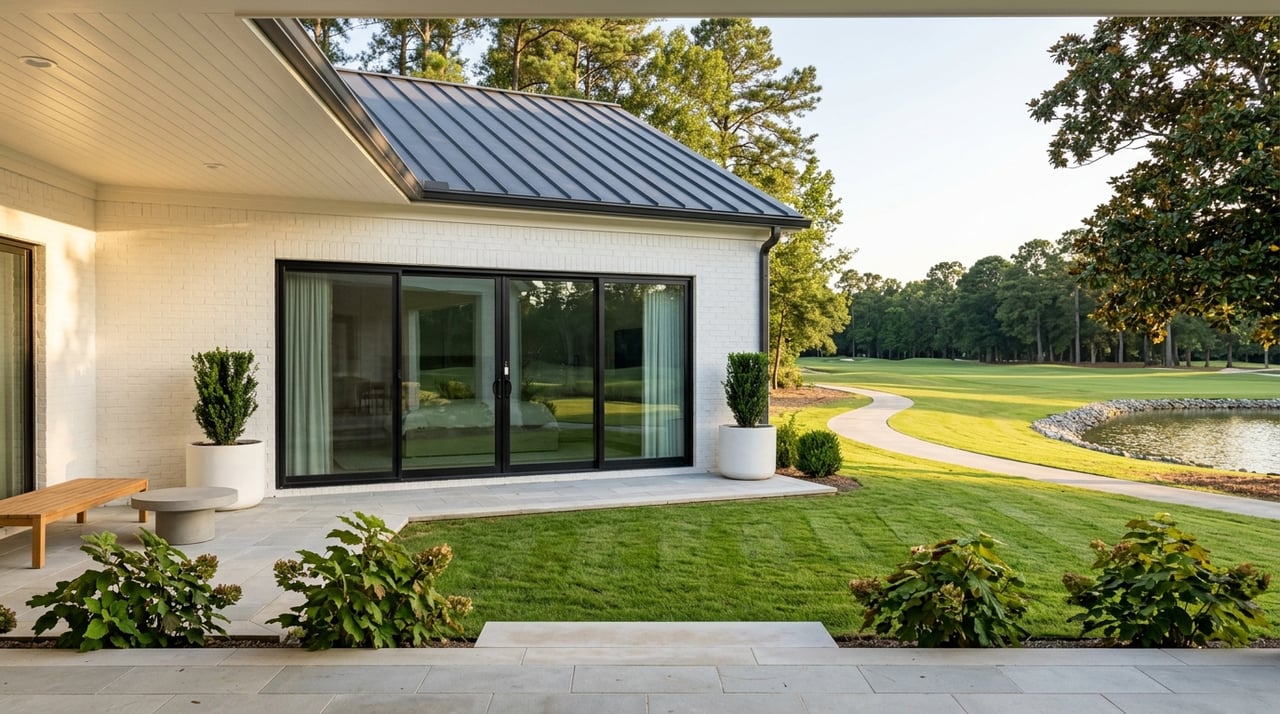
One of the biggest pricing mistakes sellers make is treating every golf-course lot the same. They are not. A full fairway view, a partial course glimpse, and a lot with little visible course presence should not be priced the same.
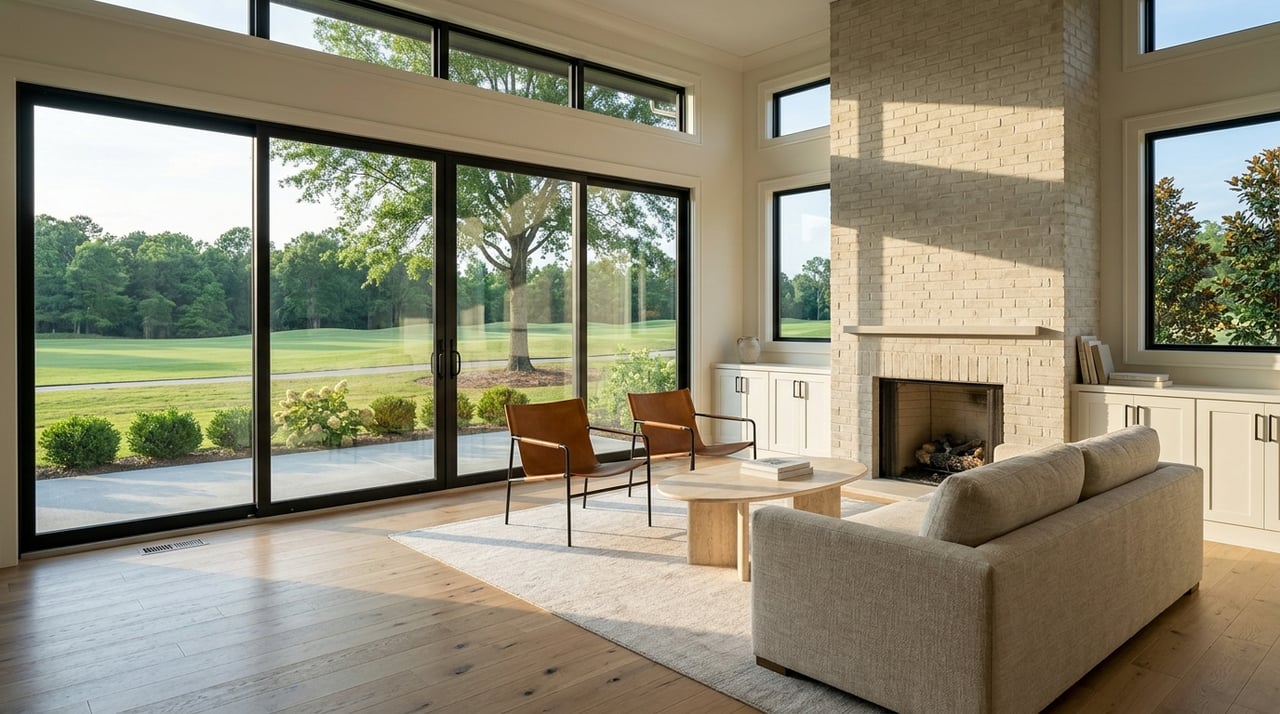
Fannie Mae’s condition and location guidance supports this idea by recognizing that similarly rated properties may still require adjustments. In practical terms, that means your lot’s visual experience matters. Buyers notice whether your home has a wide, open fairway vista or just a narrow angle toward the course.
When pricing your home, pay close attention to:
A beautiful golf setting can lift value. But too much traffic, less privacy, or a weaker view can limit that benefit.
Two homes on the same street can command very different prices if one feels updated and move-in ready while the other needs work. Fannie Mae’s guidance makes clear that recently and fully renovated homes can compete more closely with newer homes, while deferred maintenance and needed repairs can lower condition ratings.
That matters even more in golf communities, where buyers often expect polished presentation and a lifestyle-driven experience. If your home has updated kitchens, baths, flooring, windows, roofing, or outdoor living spaces, that can support a stronger price than a similar home with dated finishes or visible wear.
Before setting a number, look honestly at:
Condition does not just affect value on paper. It also affects how buyers feel when they walk in, and that can influence how much urgency they bring to an offer.
Golf buyers are not all the same. Research on golf subdivision homeowners found that proximity and view often mattered more than having a regular golfer in the household. Only 29% reported a regular golfer at home, and many buyers were drawn to the setting itself.
That is an important pricing clue. Your buyer may care deeply about the green space, privacy, and visual openness of the course, even if they do not play every week. Others may be far more focused on club access and membership-related benefits.
Another study found that golf memberships tied to a property created positive premiums after controlling for course view and other property features. That suggests a seller should avoid lumping every source of value together.
If your home includes any rights, benefits, or access connected to club membership, those details should be evaluated carefully alongside the real estate itself. The lot, the house, the view, and the club connection may each influence value in different ways.
Golf-course sellers often believe their home is too unique for standard pricing rules. Sometimes a property is unusual, but that does not mean the market stops working. In fact, a thinner sales pool usually means you need even more discipline.
When there are fewer recent golf-course sales, it becomes more important to make careful adjustments instead of making bold assumptions. You may need to look at the closest possible same-community sales first, then expand only when necessary and with clear reasoning.
A smart pricing process usually looks like this:
That process tends to produce a more defensible price than simply rounding up because the home backs to a fairway.
Your asking price and your tax value are not the same thing. Durham County reappraised all real property effective January 1, 2025. For FY2025-26, the countywide tax rate is $0.5542 per $100 of assessed value, and the combined county plus City of Durham rate is $0.9913 per $100 for properties inside the city, before any special district adjustments.
Buyers may look at that tax picture when considering monthly ownership costs, especially at higher price points. While tax assessments do not set market value, they can shape how buyers think about affordability. That is another reason to price with discipline rather than assume the golf setting alone will carry the number.
The best pricing strategy for a Durham golf-course home is precise, local, and realistic. It respects the value of the setting without exaggerating it. It also accounts for what buyers can actually see, feel, and compare.
In most cases, the right price comes from balancing five factors:
That kind of pricing helps you protect value while still attracting qualified buyers. And in a niche segment like golf-course real estate, the details often make the difference between sitting and selling.
If you are thinking about selling a golf-course home in Durham, working with a specialist who understands both the local market and the golf lifestyle can give you a sharper starting point. For a personalized pricing strategy and high-touch guidance, connect with Eddie Niemeyer.
Stay up to date on the latest real estate trends.
Eddie Niemeyer leverages local Raleigh knowledge, Coldwell Banker Advantage’s vast resources, and a client-centered mindset. Let him guide you confidently through buying, selling, or investing with personalized service and strategic insight.